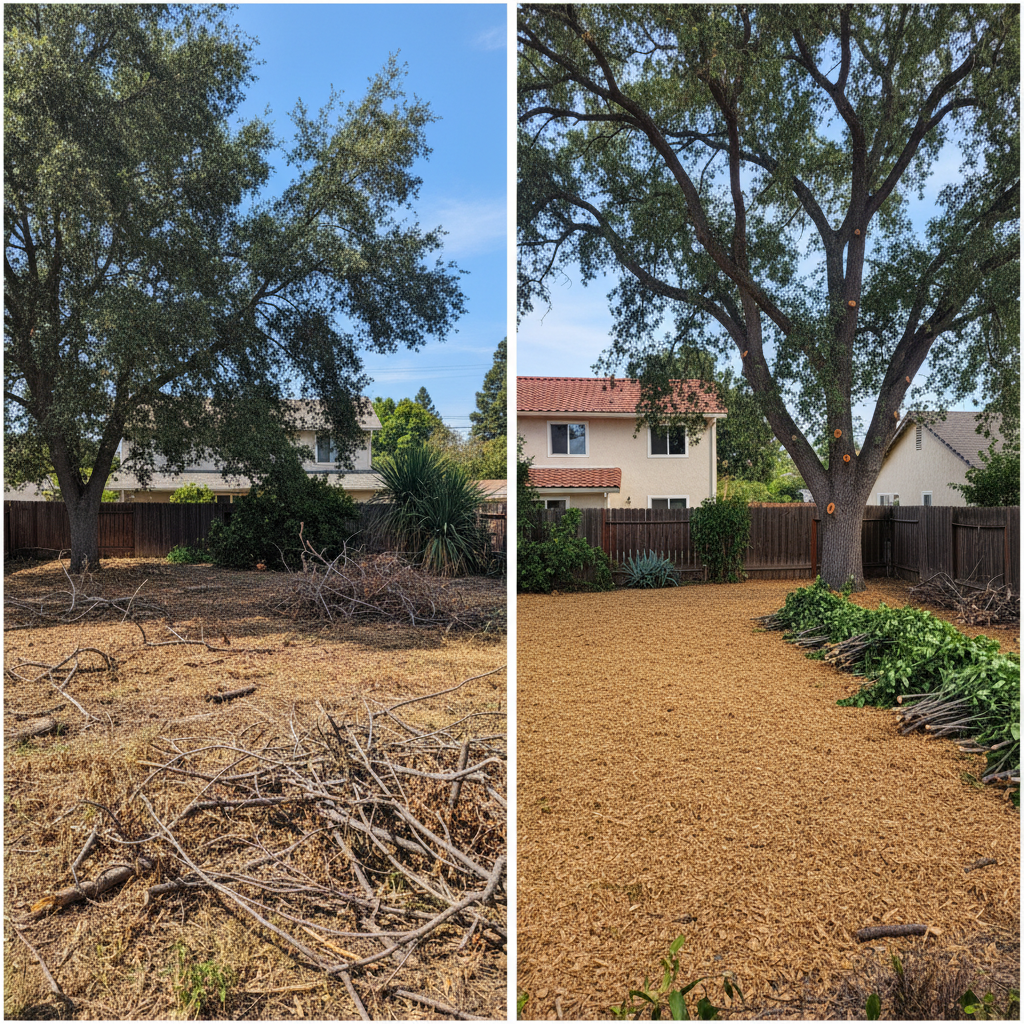
You've got trees on your property, right? And sooner or later, they're gonna need some attention. When that time comes, you've got a couple of main ways to think about getting them trimmed. It's not just about hacking off branches; it's about what you want for your tree in the long run. I see a lot of folks in Fremont, especially in older neighborhoods like Niles or Centerville, who've got mature trees that have seen better days because they've only ever had reactive trims. Let's talk about the two main approaches: structural pruning and reactive trimming.
What's Reactive Trimming?
Okay, so reactive trimming is pretty much what it sounds like. You wait until there's a problem, and then you fix it. A branch is dead? Trim it. A branch is rubbing on your roof? Trim it. It's overgrown and blocking your view? Trim it. This is the most common thing I see people doing, or asking us to do, when they call. It's usually driven by an immediate need or a safety concern.
- Cost: Usually cheaper upfront. You're only paying for the immediate work, not a long-term plan.
- Durability/Health: This is where it falls short. You're not really improving the tree's overall structure or health. You're just putting a band-aid on symptoms. Over time, this can lead to weaker trees, more susceptible to disease or storm damage.
- Maintenance: You'll likely need more frequent, unpredictable trims because you're not addressing the root causes of overgrowth or weak points.
- Appearance: Can be pretty inconsistent. You might end up with a tree that looks lopsided or has big gaps where branches were removed in a hurry.
What's Structural Pruning?
Now, structural pruning is a whole different ballgame. Think of it like building a house with a strong foundation and a clear blueprint, instead of just patching holes in the walls as they appear. With structural pruning, we're looking at the tree's overall architecture, even when it's young. We're identifying potential weak points, crossing branches, or branches that are growing in an undesirable direction, and addressing them early. The goal is to encourage a strong central leader, well-spaced scaffold branches, and a balanced canopy.
- Cost: Can be a bit more expensive initially, especially if you're starting with a young tree and doing regular maintenance. But it saves you money in the long run.
- Durability/Health: This is its biggest strength. You're actively creating a stronger, healthier tree. A structurally sound tree is much more resistant to wind, ice, and disease. This is super important in places like Fremont where we get those strong winter winds coming off the Bay.
- Maintenance: Less frequent, more predictable maintenance. Once a tree has a good structure, future trims are often lighter and focused on maintaining that form, rather than major corrective work.
- Appearance: A well-structured tree is a beautiful tree. It looks balanced, natural, and healthy. It adds curb appeal and value to your property.
My Recommendation for Fremont Homeowners
Look, I get it. Everyone wants to save a buck. But when it comes to your trees, especially mature ones that could cause serious damage if they fail, reactive trimming is a false economy. You might save a few hundred bucks now, but you could be looking at thousands in damage or removal costs down the road.
For homeowners in Fremont, I strongly recommend structural pruning. Even if your tree is already mature and hasn't had it before, it's never too late to start improving its structure. We can't always undo years of neglect, but we can definitely make it safer and healthier going forward.
Think about the clay soil we have around here. It can affect root development, which then impacts the tree's stability. A tree with a strong, balanced canopy is better equipped to handle any root issues or strong winds. It's an investment in your property, your safety, and the longevity of your trees.
When Busy Bee Tree comes out for a quote, we're not just looking at what needs to be cut right now. We're looking at the whole tree, its future, and what's going to keep it healthy and safe for years to come. That's the Busy Bee Tree difference.